ABOUT

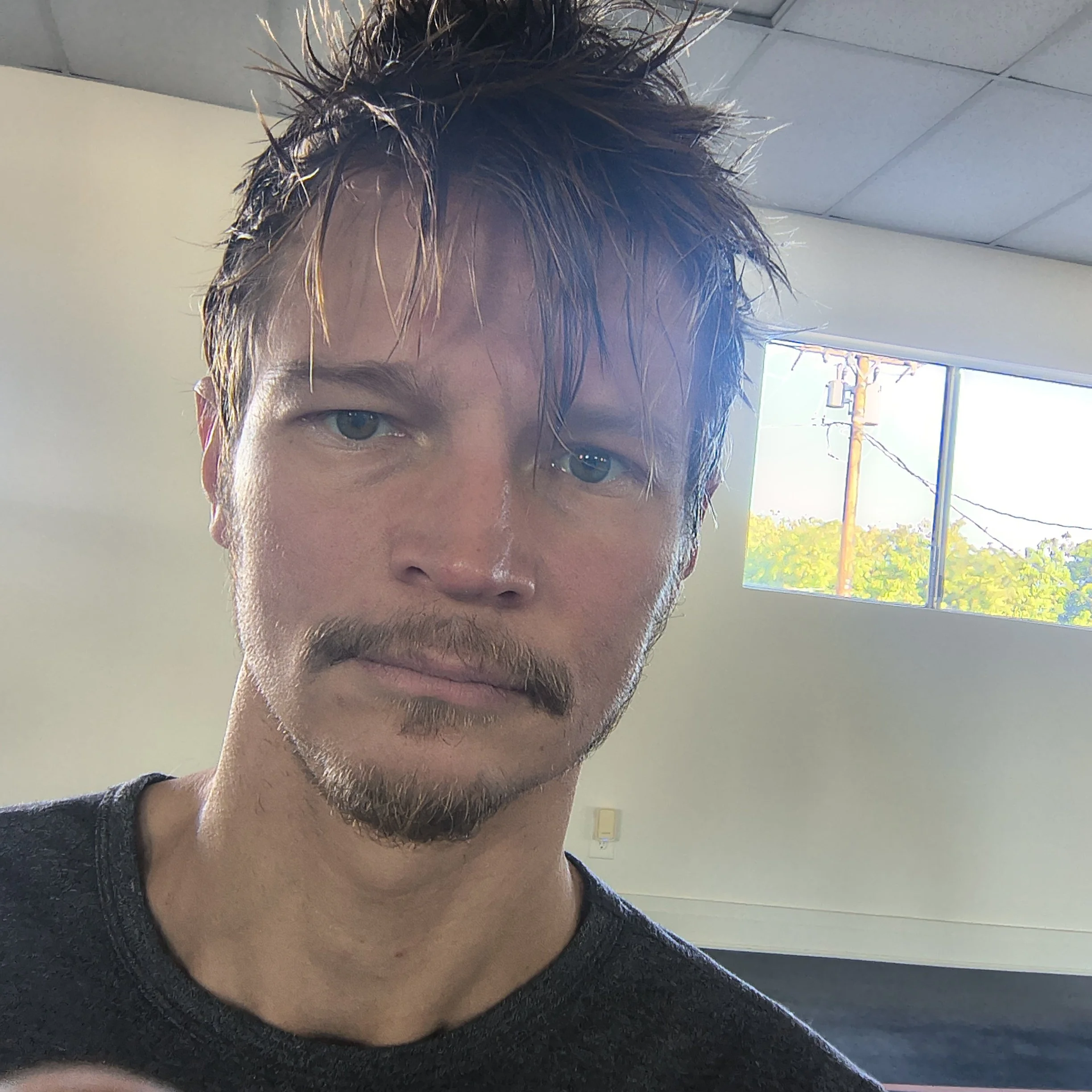
Mark is not defined by a single place. Having lived in nine U.S. states and spent a year in India, he is deeply familiar with movement, change, and adaptation. He graduated from Washington State University in 2007 with a degree in Economics and entered the fast-paced world of financial services immediately after college.
For a decade, Mark worked desk-bound roles as a business banker, commercial insurance agent, and active trading stockbroker. Years of prolonged sitting severely damaged his back—compounded by a complete lack of understanding of posture and breath.
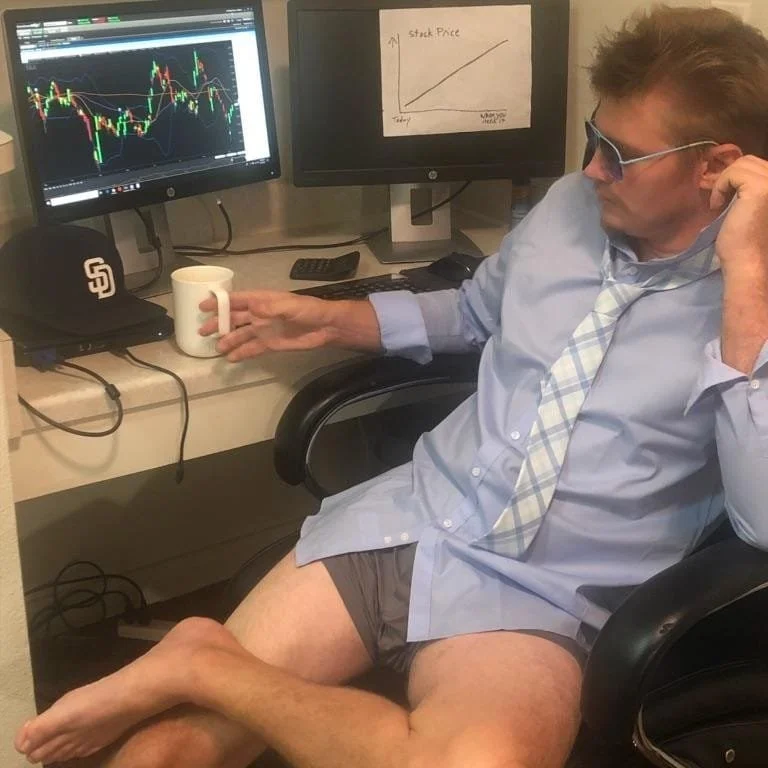

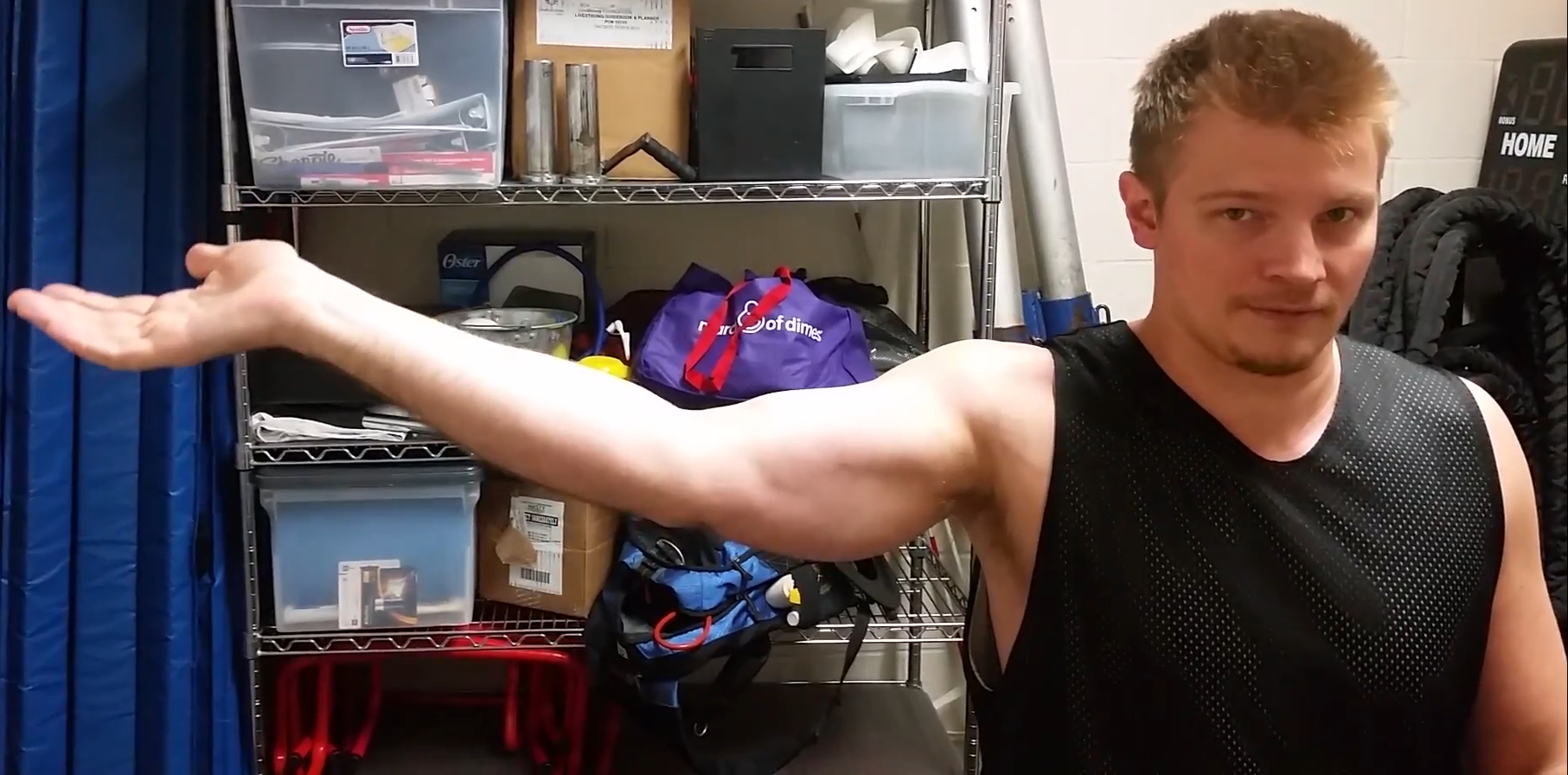
In May 2014, Mark experienced the worst week of sleep in his life. He was repeatedly awakened by intense shoulder pain that forced him out of bed simply to find relief. The pain felt as though the muscle was tearing from the bone. When the week ended, his right shoulder was noticeably weaker than his left. He ignored the issue and continued working—often harder than before. Between 2016 and 2018, Mark routinely worked 60–80 hour weeks from home. Mark was diagnosed with thorasic outlet syndrome at 31.
In January 2019, the disc between his L4 and L5 vertebrae tore during a chiropractic visit. Mark just turned 36. He had sought chiropractic treatment for neck pain that stemmed from years of compensating for his unresolved shoulder injury. An orthopedic specialist reviewed his MRI and dismissed the findings, telling him, “We all have tears. Go live your life.” He was referred to physical therapy three times per week for one month. At $75 per visit, the cost of month totaled $900. Although Mark continued the prescribed stretches daily after PT ended, his condition worsened—particularly in his legs.
While pain subsided, new symptoms emerged: sciatic nerve pain, persistent muscle twitching, and severe discomfort in his feet. His legs seemingly were losing hair. Physical activity became limited. Even one game of pickleball caused heavy, exhausted legs as blood rushed downward to his feet.
In April 2020, Mark endured another stretch of sleepless nights marked by restless legs, muscle twitching, and an inability to find comfort in any position. He feared a future of progressive disability: a wheelchair by 60, neuropathy, and possibly ALS. Something was clearly wrong.
Then, unexpectedly, he found the root cause.
In July 2020, Mark took an at-home food allergy test that revealed a mild allergy to eggs—something he had consumed daily for over 15 years. He eliminated eggs immediately. It took three days to remove the eggs from his system, but after, his symptoms dramatically improved, including noticeable relief in his right shoulder. Game changer #1. The inflammatory response from the allergy had been affecting his entire nervous system through an electrical charge up his spine. Each day following felt like a breakthrough. Despite being advised to eat an “anti-inflammatory diet” by the orthopedic doctor, no physician had suggested food allergies as a potential cause.
As Mark continued removing elements that hindered his healing, his quality of life improved. He eliminated alcohol and refined his movement habits by eliminating pickleball. Pickleball is horrible for the shoulder. Mark continued to maintain the stretching routine provided by the physical therapist. Although, it felt uninspired and directionless without proper knowledge.
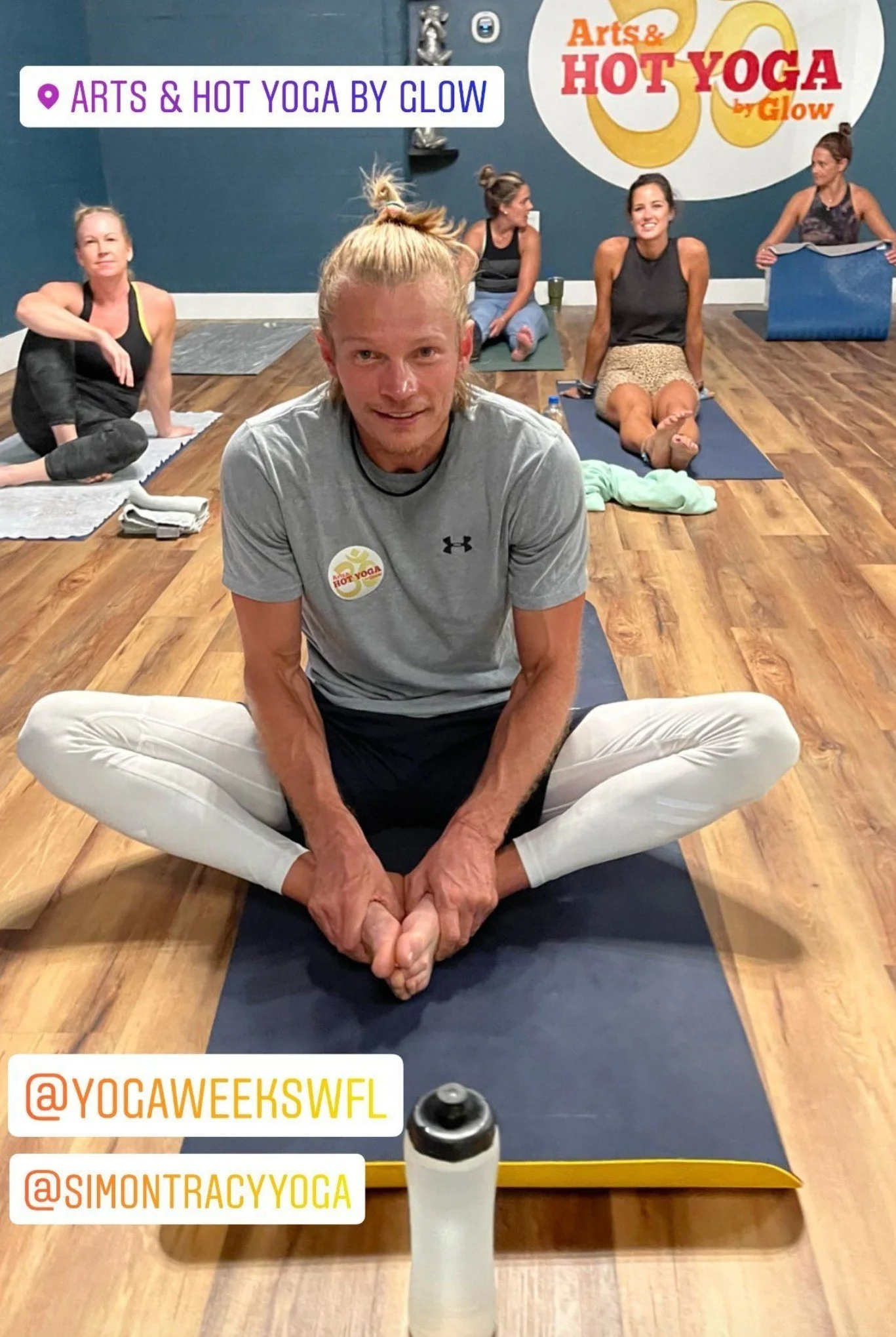
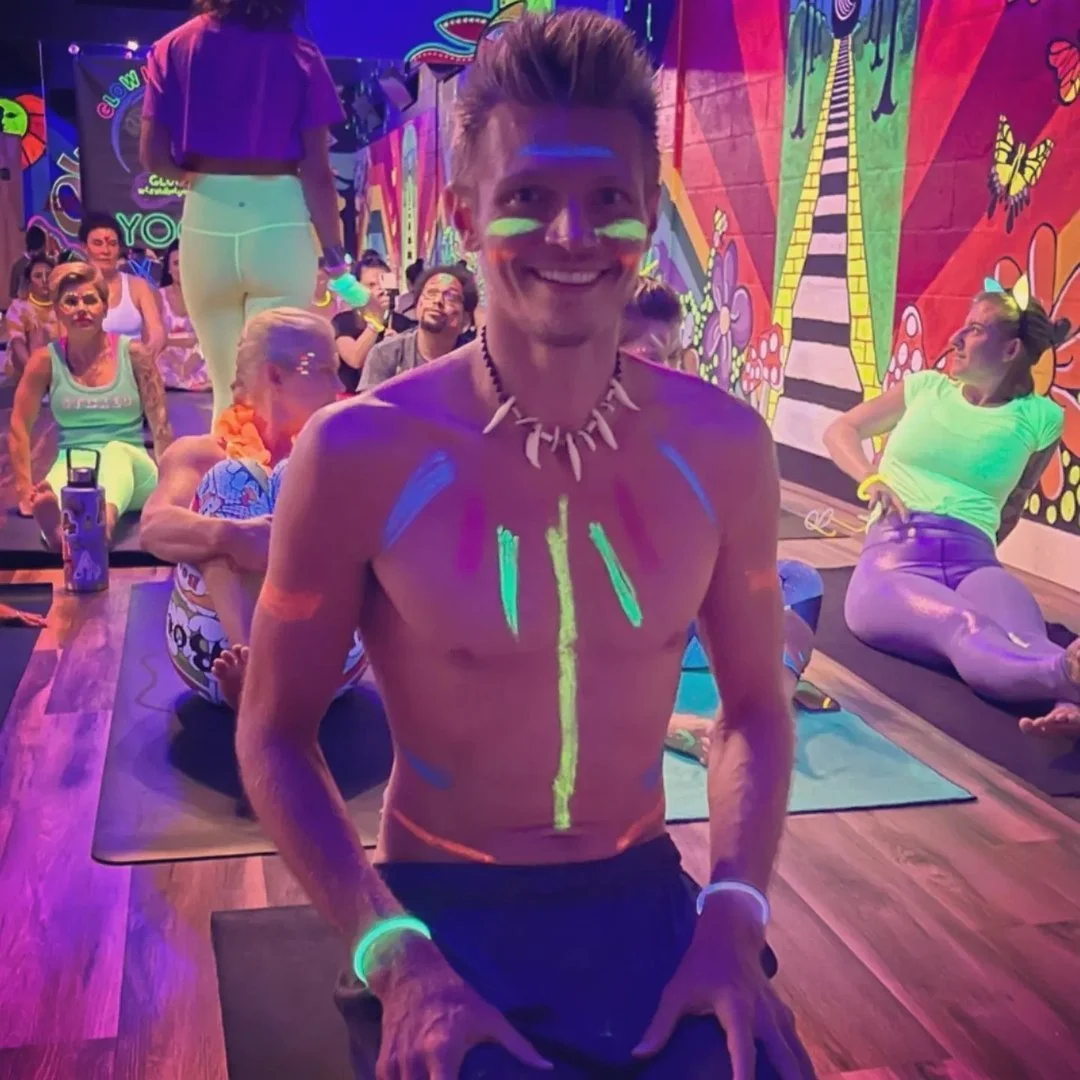
In April 2021, Mark attended his first yoga class—goat yoga. He loved it. He transitioned to daily vinyasa yoga however, one week later, discovered Bikram Hot Yoga. Bikram yoga is a form of hatha yoga. Game changer #2. After his first class, he immediately noticed improvements in his gait. That day, he committed to Bikram yoga daily, often twice. Every class was opportunity to get better, and he wasn’t going to waste any opportunity.
During his fourth Bikram class, Mark had a breathing issue while practicing locust pose. Disappointed after the rough class, he laid in savasana for several hours, focusing solely on breath. For the first time, he realized he had been breathing incorrectly his entire life. He learned how to draw air into the lungs using the throat, allowing for deeper, smoother, more powerful breathing. This single change transformed his energy level. Mark credits Bikram yoga—and Bikram Choudhury—for giving him new life. Mark even started a new career as a substitute teacher (K-12).
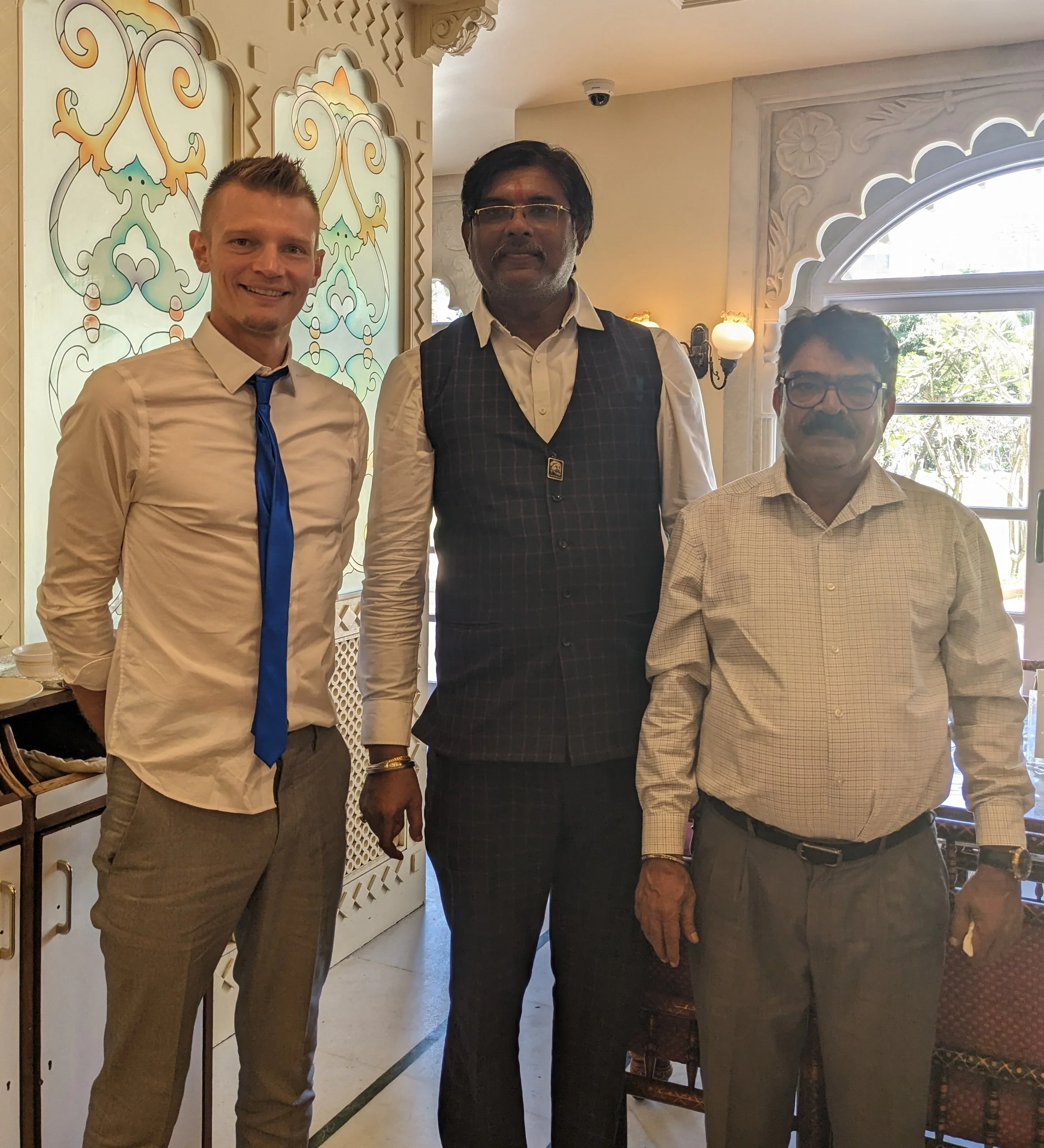
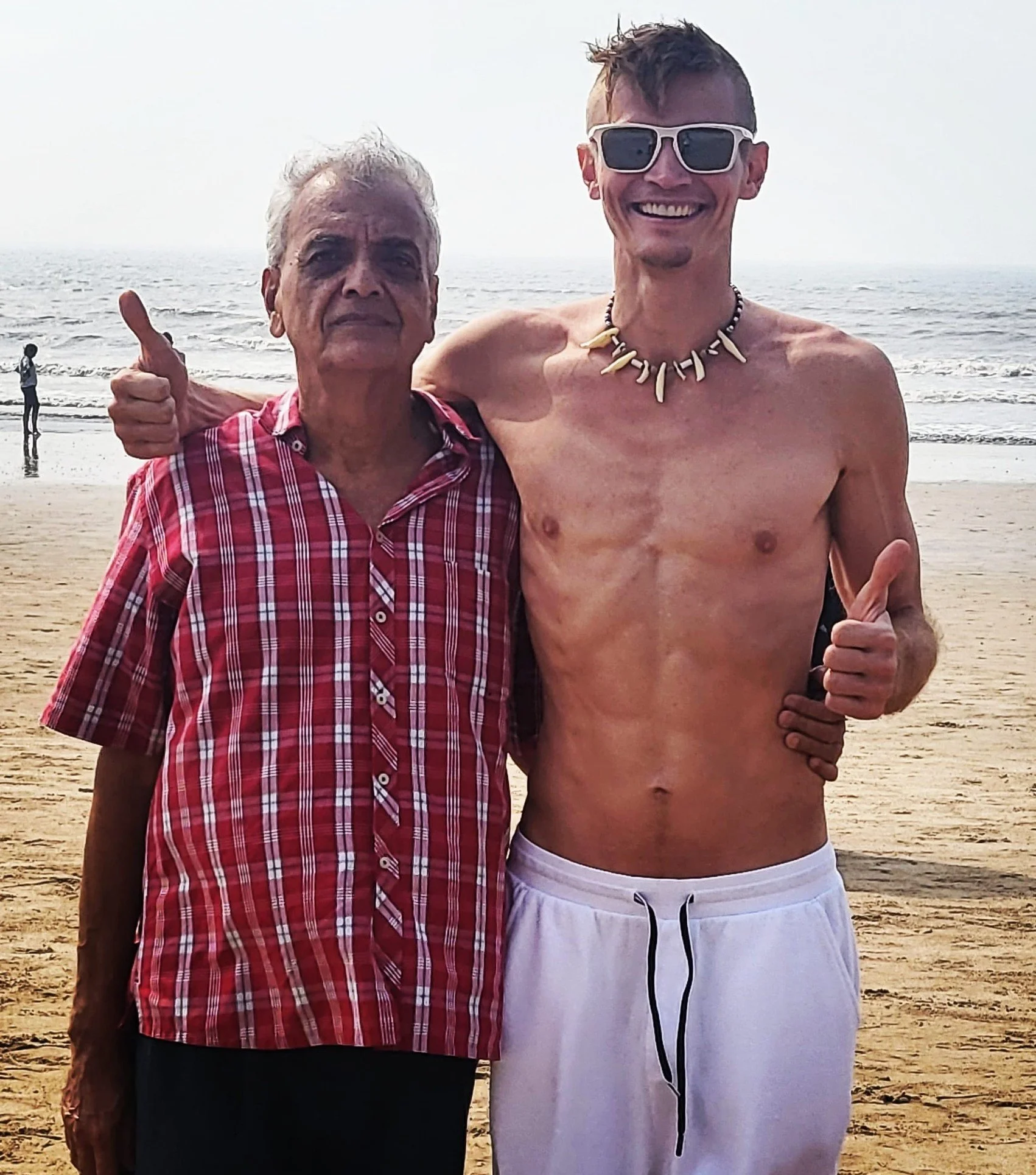
In January 2023, Mark traveled to India for a year. He lived in Mumbai, Juhu Beach next to the ISKCON Temple. There, he studied yoga under three teachers: Mandeep, Pankaj, and Marc Mead. Each played a critical role in shaping his understanding of hatha yoga.
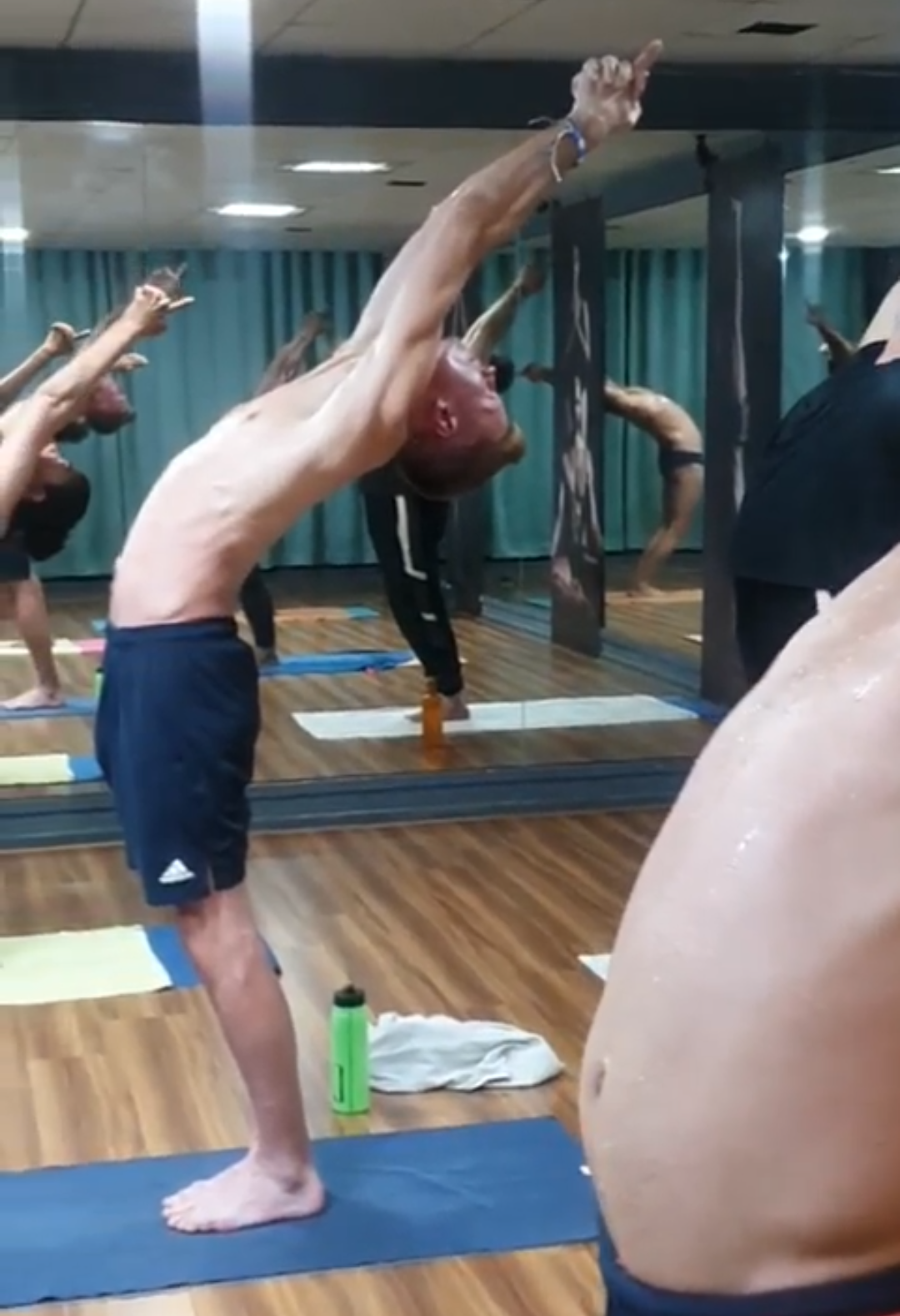
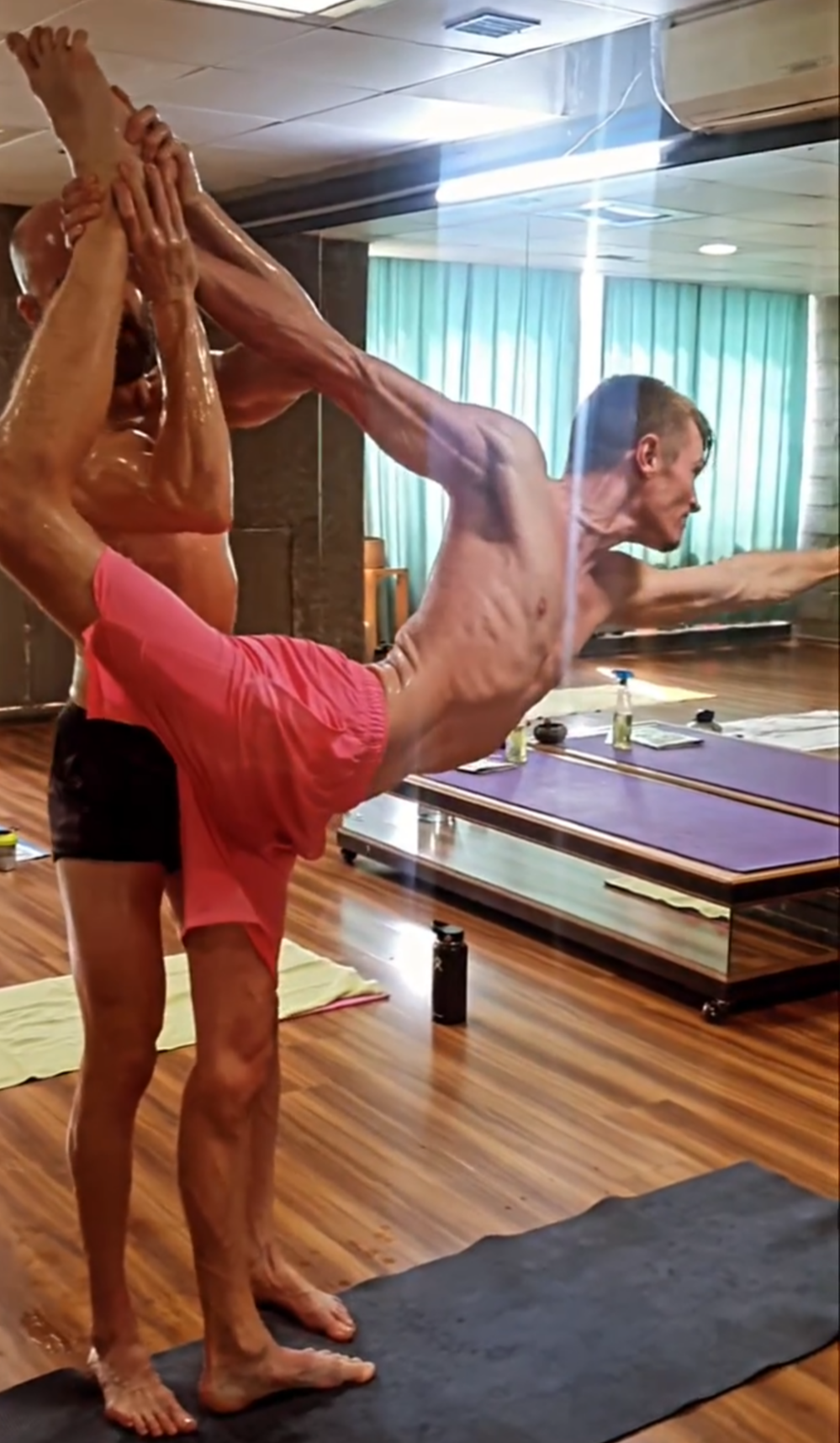
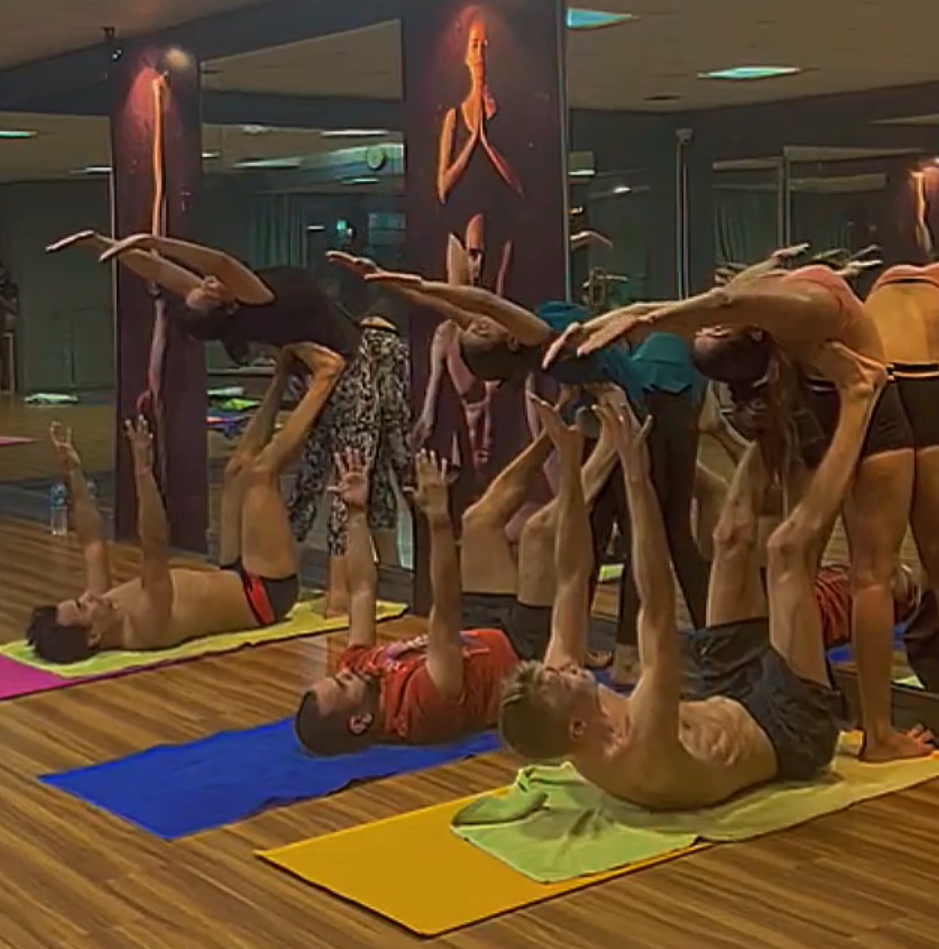
Mandeep would physically guided him into postures, allowing him to experience correct alignment and depth. She taught him the Bikram dialogue and how to adapt teaching to different audiences.
Pankaj, whose lineage traces back thousands of years to Rishikesh, taught a rare style of yoga, not known in the states. He focused on targeted development—hips, shoulders, and back—to enhance flexibility and strength. This is the style Mark teaches today in Los Angeles. A hatha yoga style that does not require heat.
Marc Mead provided insight and explanations of how the body works, in order for it to open. These conversations deeply resonated with Mark. He models the intensity and presence of Marc Mead and strives to embody him as a teacher.
During his time in Mumbai, Mark regularly ate at the ISKCON Temple buffet. Through the plethora of choices, Mark discovered Ayurveda—the science of life. This philosophy further shaped his understanding of digestion, inflammation, and energy. Game changer #3.
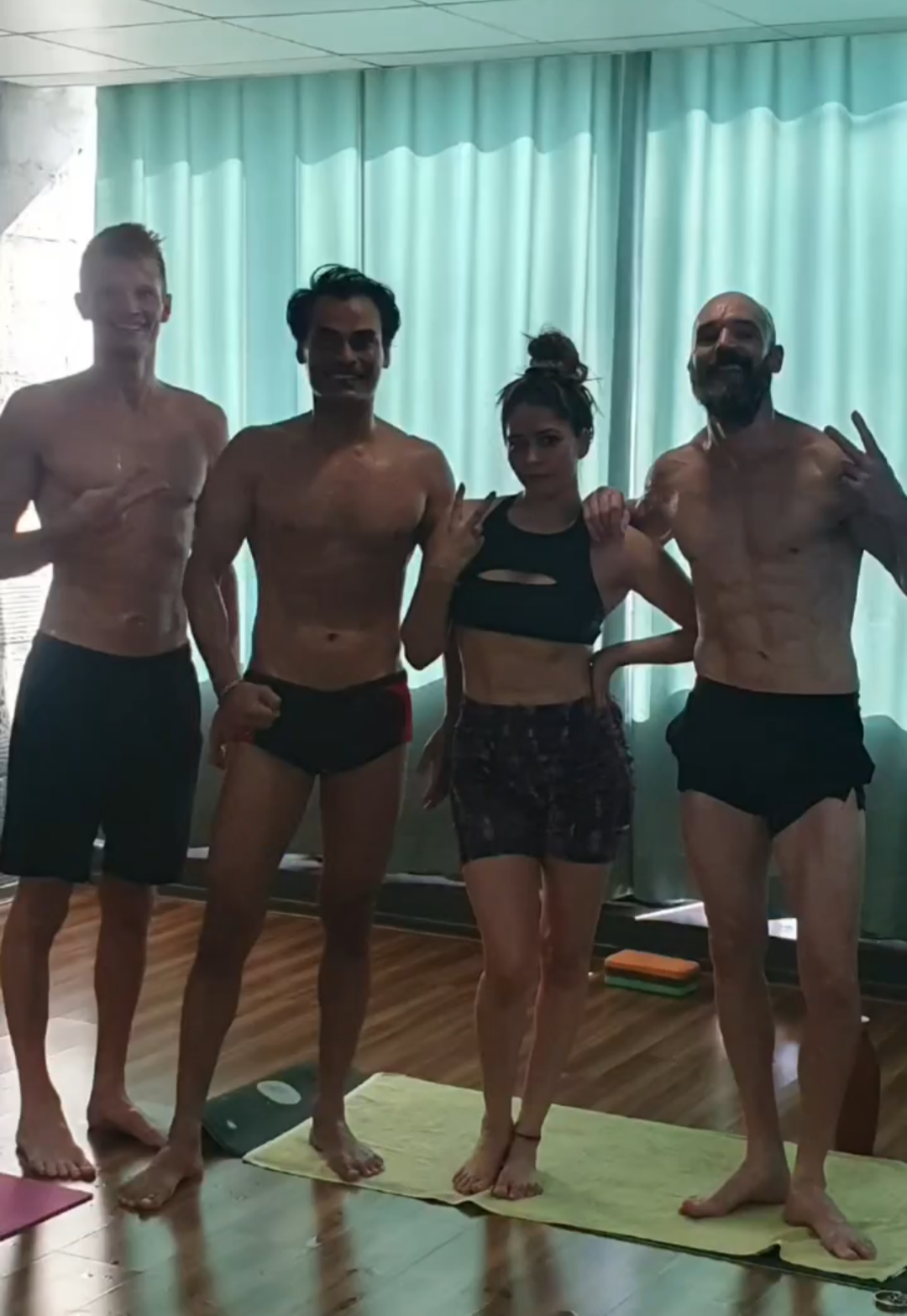
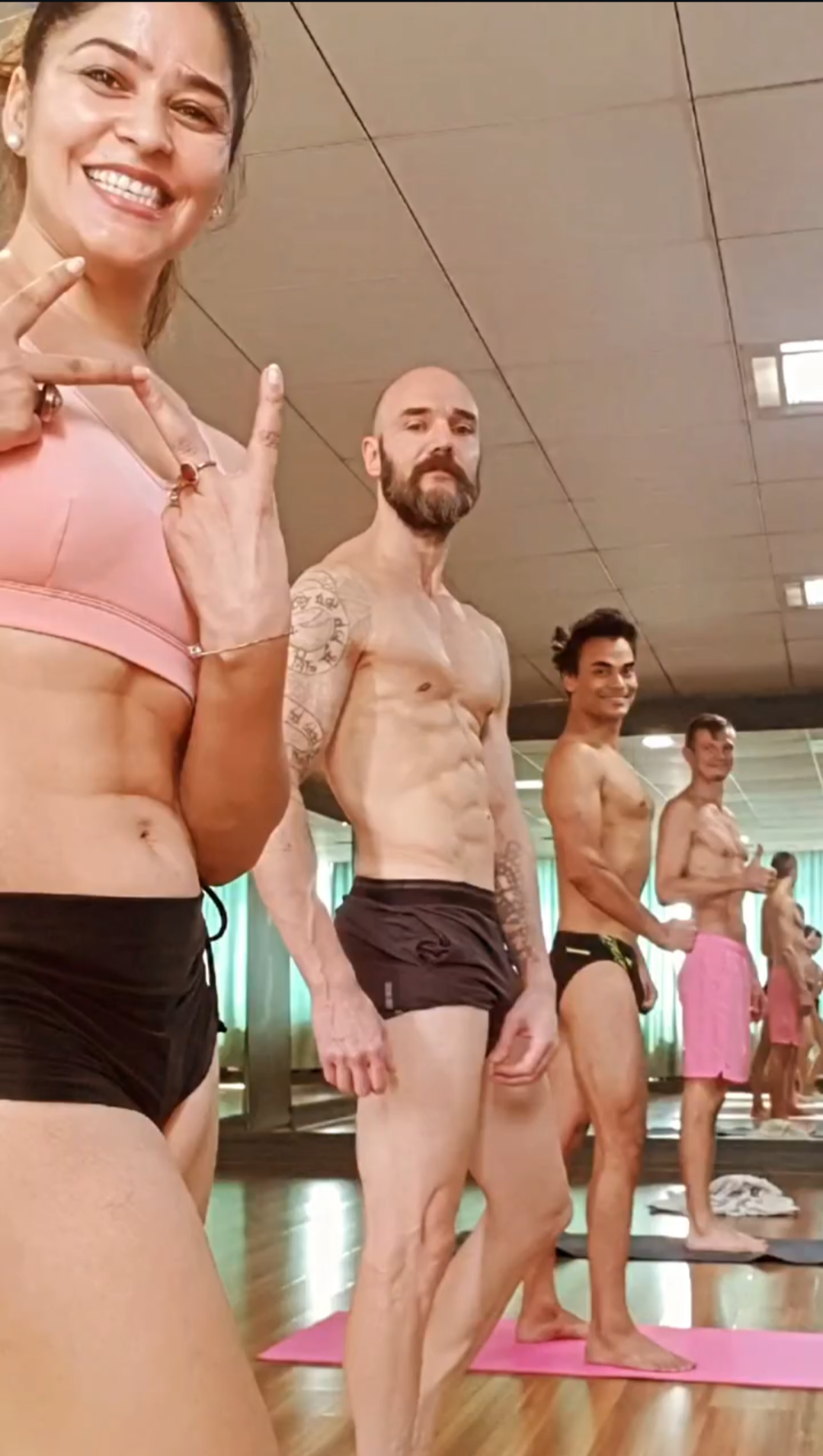
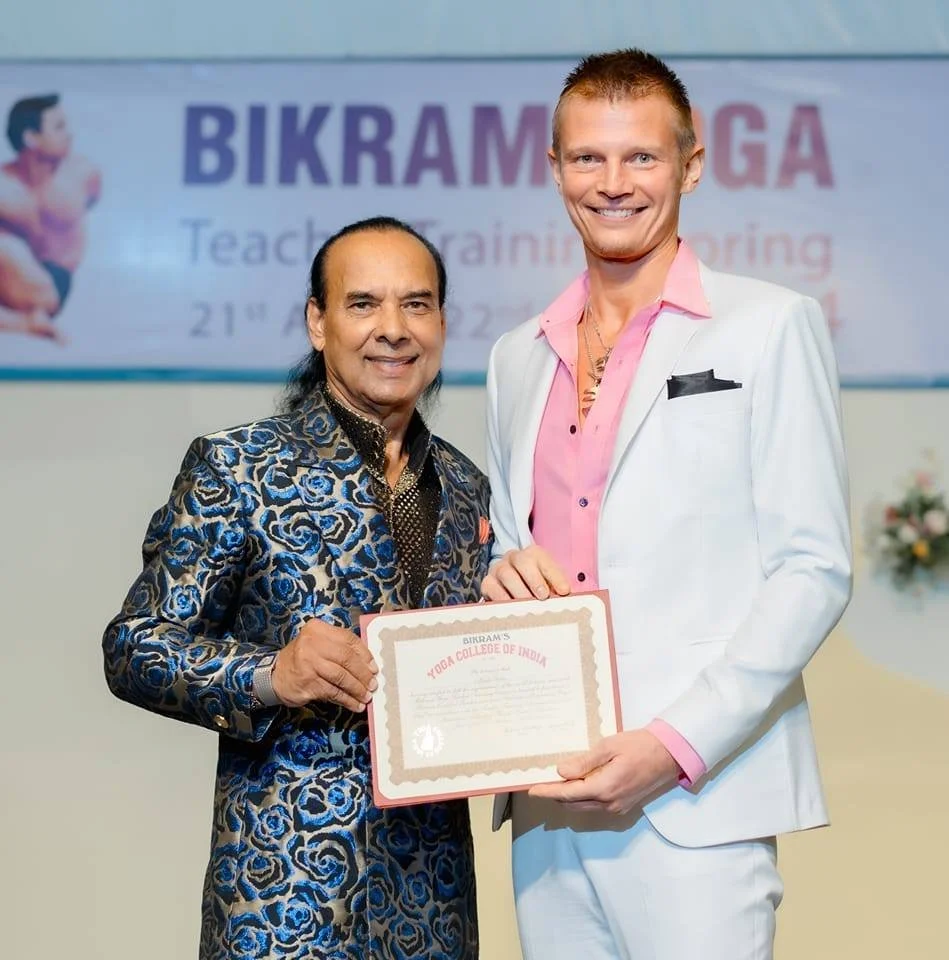
After returning to the U.S., Mark resumed substitute teaching (K-12) while beginning his yoga teaching career. In Spring 2024, he completed Bikram Yoga Teacher Training in Thailand under Bikram Choudhury, studying his timing, emphasis, and teaching efficiency. Mark’s goal with Bikram yoga is to help students ease into the series without feeling overwhelmed by heat and information. Bikram says, “Yoga begins when medical science ends…” This means “stop overthinking.” Chasing the answers through medical science is not going to help you do yoga, nor do it better. I don’t like the word “practice.” You will not hear me use it. I like “do.” By doing yoga every day, everything will become easier. In India the people say, “Yoga se hi hoga.” Yoga makes everything better.
In March 2025, Mark moved to Los Angeles. He began teaching Bikram yoga throughout Los Angeles area, including Downtown, South Pasadena, Encino, and Venice. He continues to evaluate modern habits that negatively affect posture and breathing—cars, desks, couches, cell phones, and processed foods. Mark has not sat on a couch in over seven years. He eliminated restrictive clothing, known as underwear, early in his recovery to reduce spinal pressure. He eliminated eggs, alcohol, meat, and processed food. Dairy in moderation.
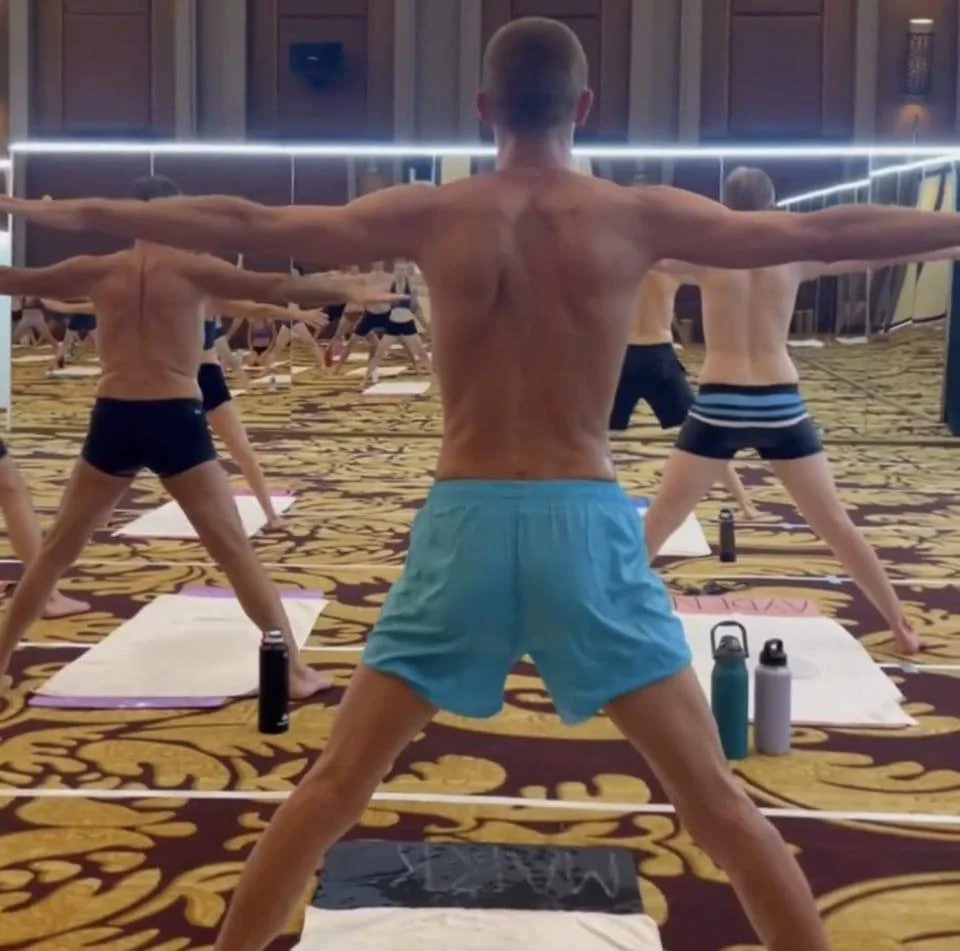
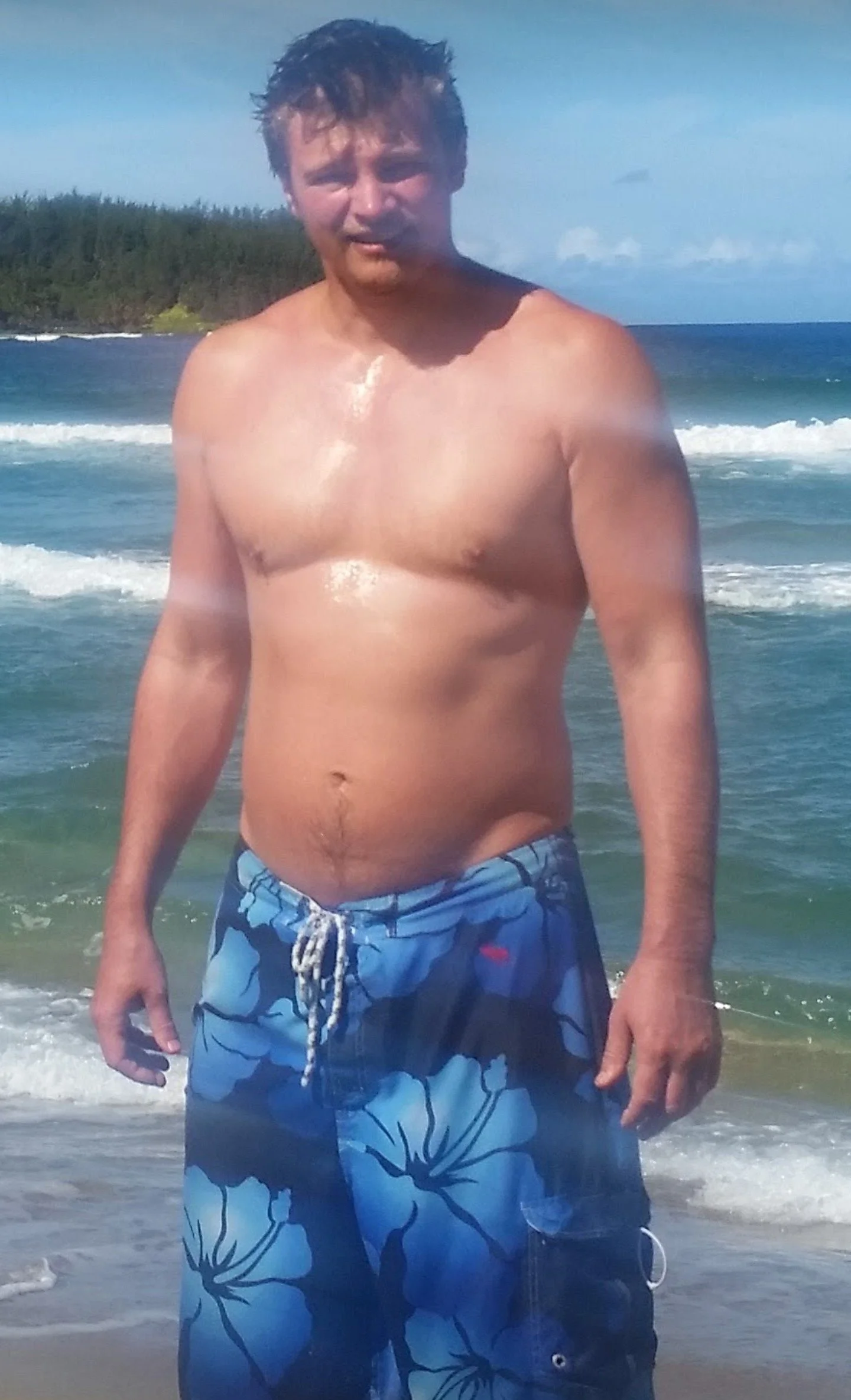
Mark is deeply passionate about natural, holistic, effective health practices. He is concerned by the increasing reliance on prescription drugs for weight loss and anxiety—conditions he believes are often linked to improper breathing and gut inflammation. Both of which he experienced. His own 70-pound weight loss was unintentional, achieved by removing foods that irritated his system and prioritizing energy over taste. Inside over outside. Putting in the work behind closed door versus wanting to be seen. Fixing himself before trying to help others.
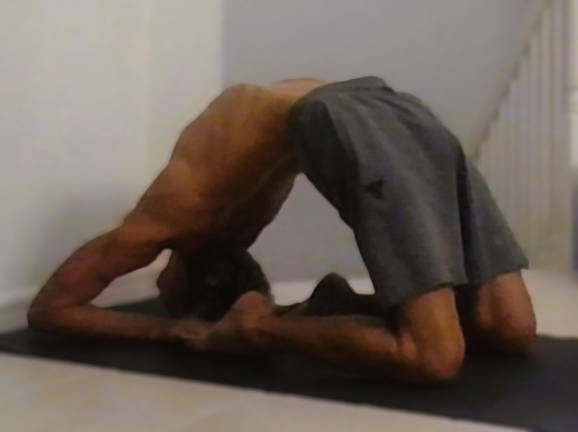
Since February 2019, Mark’s focus has been singular: improving his ability to walk. As his gait improved, so did every other aspect of his life. Today, his energy, mobility, and vitality speak for themselves.
Trained as an economist, Mark evaluates what works versus what doesn’t. What is worth time and investment, and how to prioritize the order. At 43, he is often mistaken for being decades younger. Mark is not a former dancer and did not begin stretching until 36. Yoga at 38. Mark sat down at a desk job for 10 years and damaged his back. His success comes from consistency, pattern recognition, and lived experience, but most importantly, self-reflection. What can be done? What is the human body capable of?
Mark teaches what he knows—and what he lives. “Yoga se hi hoga.” Yoga makes everything better, as everything involves breath and core.
Health is more important than any job. Stress is a silent killer. Breath, posture, and movement are the foundation of longevity.
Come learn from someone who can honestly say, “Do you know how easy this is for me?”
Come to the Yogaman. 414 N La Cienega in Weho!